A museum has very different digital needs than a business. Visitors want to know when they can come, what they’ll see, and how to plan their visit. It must be possible to book guided tours. Tickets must be available online. And all of this has to work smoothly on the phone of someone standing on a street corner in Antwerp, wondering whether to go inside.
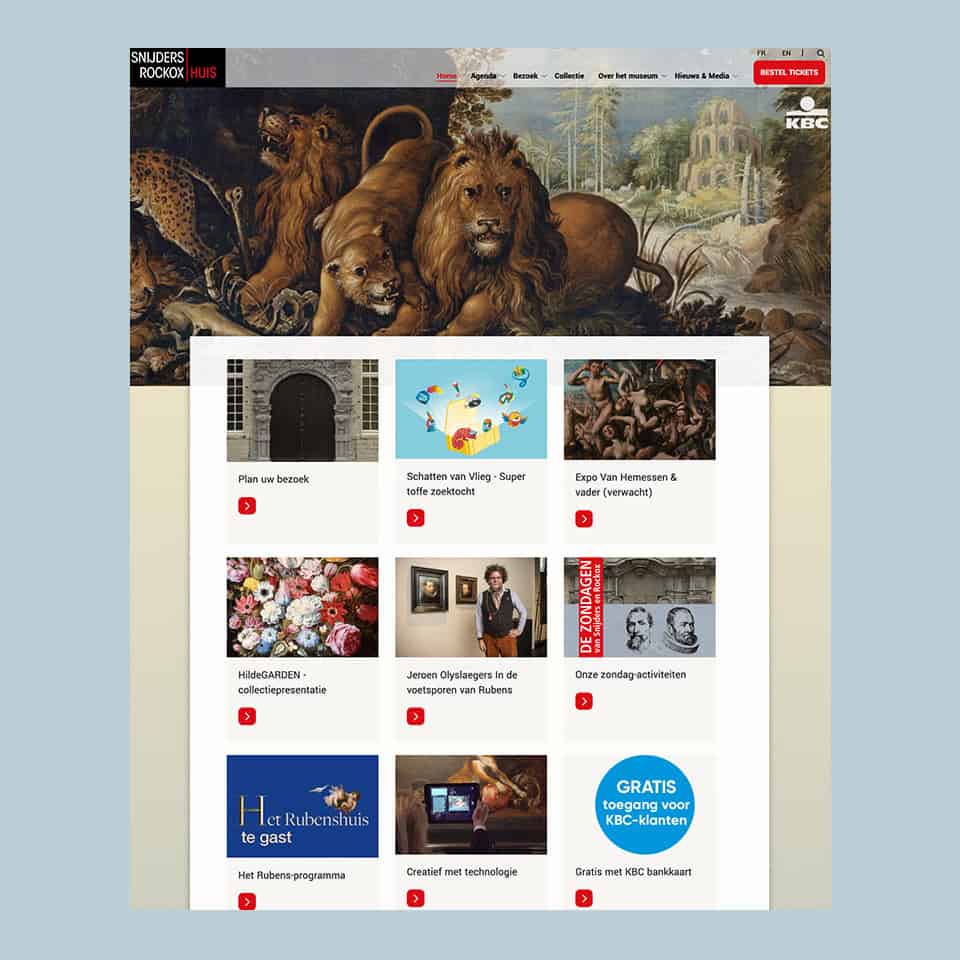
The Snijders & Rockoxhuis website is the result: the Antwerp museum, dedicated to 17th-century Flemish art and culture, commissioned LOFT 33 to build this digital experience.
A museum website that does more than just provide information
Many cultural institutions have a website that is primarily informational: opening hours, address, an overview of the collection. That’s a start, but it’s not enough for a museum that also wants to actively attract and guide visitors.
The problem is this: a visitor who leaves your website without booking is a visitor who might not come at all. The barrier between interest and decision should be as low as possible. That means ticketing and reservations shouldn’t take place on an external page or through a separate system. They need to be part of the experience on the website itself.
The same applies to guided tours. Groups, schools, and individual visitors who want to book a guide should be able to do so online: choose a date, check availability, and confirm. No back-and-forth emails, no phone calls unless necessary.
A platform that works for both visitors and the museum itself
LOFT 33 built an informational website in Joomla for Snijders & Rockoxhuis, featuring two integrated modules: a ticketing system and an online guide booking platform.
The ticketing system allows visitors to purchase tickets for temporary and permanent exhibitions directly through the website. The platform is linked to the museum’s management system, so that availability and capacity are tracked in real time.
The tour guide booking platform works on the same principle: groups and individual visitors select a date, view guide availability, and confirm their reservation. The museum manages the schedule through a simple backend, without the need for external tools or manual follow-up.
The site’s informational structure tells the story of the museum: the collection, the history of both buildings, temporary exhibitions, and educational programs. The content is designed for visitors who are still making up their minds, not just for those who are already convinced.
What This Project Illustrates About Digital Platforms for Culture
Cultural institutions often underestimate just how much work their website can save them—and just how many more visitors a good digital platform can attract. A museum website that merely provides information misses out on opportunities. A museum website that handles bookings, reservations, and visitor guidance functions as a front desk 24 hours a day.
For LOFT 33, this type of project represents a logical extension of its work with small and medium-sized enterprises into the cultural sector. The challenges are similar: complex information structures, multiple target audiences, and the need for customized systems that work together seamlessly.
Do you run a museum, a cultural institution, or an event planning company that needs a platform that does more than just serve as a brochure? Talk to LOFT 33. Learn more about custom websites and platforms.
Frequently Asked Questions About Websites for Museums and Cultural Institutions
Yes. The guided tour booking platform on the Snijders & Rockoxhuis website is designed to allow individual visitors, groups, and schools to make reservations, with a calendar that the museum manages itself through the backend.
Yes. The museum can adjust its opening hours, capacity, and the guides’ schedules itself through a simple backend, without the need for external tools or manual follow-up.
Yes. LOFT 33 can build a ticketing module as part of a new website or integrate it into an existing platform, depending on the CMS. Please contact us for an analysis of your current situation.
For a project of this size, you can expect it to take three to five months, depending on the complexity of the modules and the availability of content. An intake session at LOFT 33 will provide you with a realistic timeline.
An external ticketing solution (such as a third-party iframe) redirects visitors away from your site and has its own look and feel. An integrated module operates within your own platform, maintains the brand experience, and gives you full control over the data.
Absolutely. A museum website attracts visitors through search queries such as “museum in Antwerp,” “17th-century Flemish painting,” or “weekend activities in Antwerp.” A good content structure and technical SEO strategy ensure that the site appears in the results for those search queries.
That depends on the complexity. For sites with member portals, reservation systems, and extensive content structures, LOFT 33 primarily uses Joomla. For simpler museum websites, WordPress is also a good option.
Discover more

15 October, 2026
How do you optimize Google Maps for your business?
A complete and up-to-date Google Business Profile helps customers find, contact, and visit your business. Find out how to align your business information, categories, photos, reviews, and website to sustainably boost your local visibility on Google Maps. Discover how to optimize Google Maps and your Google Business Profile for more relevant local connections online.

12 October, 2026
Digitizing Trust: The mHealth Belgium Website
LOFT 33 built the mHealth Belgium website, the official Belgian platform for the validation of mobile health apps. Institutional and clear.
8 October, 2026
How do you build a website that attracts new customers?
A beautiful website doesn't automatically attract new customers. Discover how strategy, content, SEO, user-friendliness, and conversion work together to reach relevant visitors, build trust, and guide them toward a clear next step.