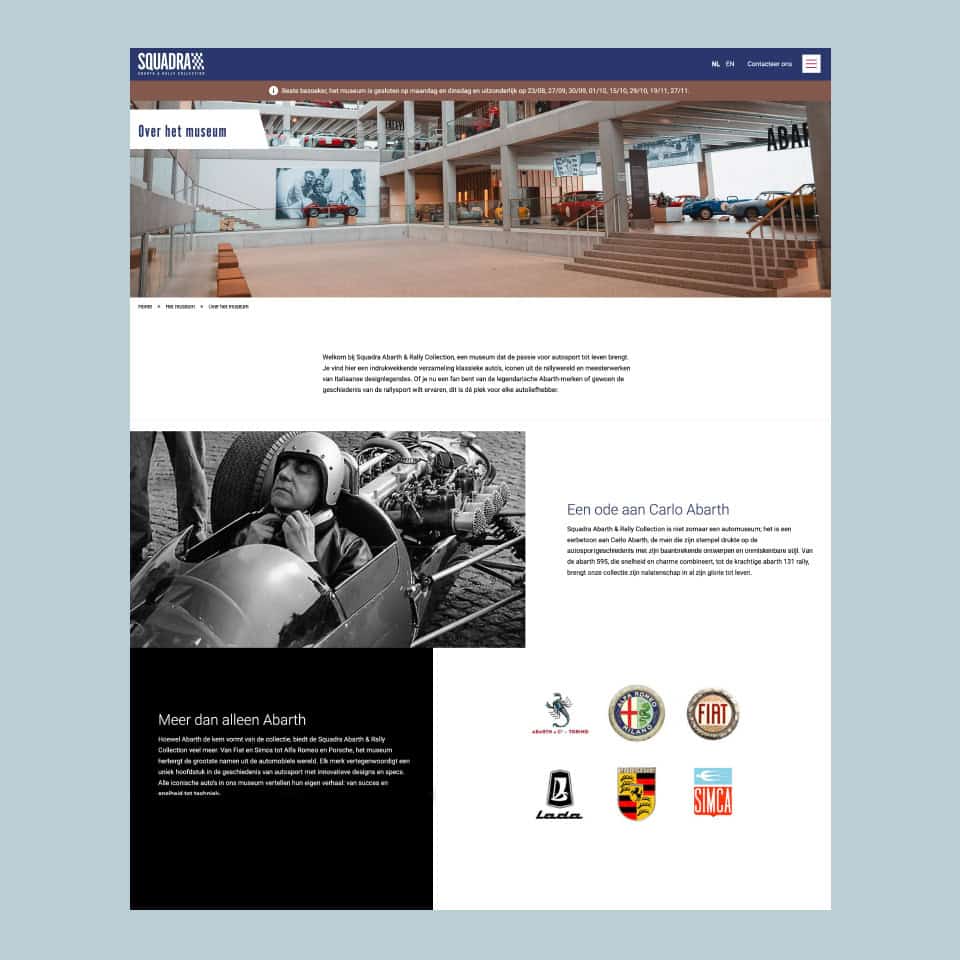
The Squadra website had to showcase a product that sells itself if presented properly. Squadra Abarth & Rally Collection in Lier is just such a project. More than 175 classic rally and Abarth cars, collected over decades, all in one location. The challenge isn’t to spark the visitor’s enthusiasm—that comes naturally once they know what’s on display. The challenge is to ensure that they actually plan and pay for their visit.
When Passion Needs a Platform
A niche collection attracts a specific audience: car enthusiasts, rally history buffs, and families looking for a unique day out. That audience searches online. They Google “car museum Belgium,” “classic Abarth cars,” or “museums in Lier” and land on a website that either convinces them to visit or doesn’t.
The problem with many niche attractions is that the website fails to translate the founder’s passion into an experience for the uninitiated visitor. The site describes the collection for someone who’s already convinced, but doesn’t guide the visitor who’s still on the fence. And if that visitor does decide to come, they have to call or email to get tickets—a hurdle that could easily be avoided.
A museum website that turns visitors into bookings
LOFT 33 built an informative website for Squadra using Joomla, complete with an integrated ticketing system. Visitors can purchase tickets directly through the site: they can view opening hours, prices, and availability, and pay online. No extra steps. No external redirect to an unknown platform.
The site’s content structure is organized into two layers. The first layer appeals to enthusiasts: photos of the collection, the history of the cars, the stories behind the Abarth legacy, and the history of rally racing. This layer makes the site appealing to anyone already familiar with the world of classic rally racing.
The second layer appeals to the hesitant visitor: What exactly will I find there? Is it worth the trip for my kids? How do I get there? These questions are answered without the visitor having to search for the answers.
The result is a website that caters to both types of visitors and minimizes the steps required to go from interest to booking.
What this project illustrates
Attractions and museums with a niche audience face a dual communication challenge: to persuade and to convert. The website must both reflect the museum experience and remove practical barriers. Ticketing is not a secondary concern in this regard; it is the final piece of the user experience.
For LOFT 33, Squadra is a great example of what a well-designed digital platform can do for a passion project with commercial potential. The technology serves the story, and the story serves the visitor.
Do you have an attraction, museum, or event venue that wants to attract visitors online and sell tickets? Start with a no-obligation consultation. Or read first about what LOFT 33 can do in terms of custom websites and platforms.
Frequently Asked Questions About Museum Websites with Ticketing
Yes. The guided tour booking platform on the Snijders & Rockoxhuis website is designed to allow individual visitors, groups, and schools to make reservations, with a calendar that the museum manages itself through the backend.
Yes. The museum can adjust its opening hours, capacity, and the guides’ schedules itself through a simple backend, without the need for external tools or manual follow-up.
Yes. LOFT 33 can build a ticketing module as part of a new website or integrate it into an existing platform, depending on the CMS. Please contact us for an analysis of your current situation.
For a project of this size, you can expect it to take three to five months, depending on the complexity of the modules and the availability of content. An intake session at LOFT 33 will provide you with a realistic timeline.
An external ticketing solution (such as a third-party iframe) redirects visitors away from your site and has its own look and feel. An integrated module operates within your own platform, maintains the brand experience, and gives you full control over the data.
Absolutely. A museum website attracts visitors through search queries such as “museum in Antwerp,” “17th-century Flemish painting,” or “weekend activities in Antwerp.” A good content structure and technical SEO strategy ensure that the site appears in the results for those search queries.
That depends on the complexity. For sites with member portals, reservation systems, and extensive content structures, LOFT 33 primarily uses Joomla. For simpler museum websites, WordPress is also a good option.
Discover more

21 September, 2026
Have a professional website built, or build it yourself with AI?
Can you create a good business website yourself today using AI or a free website builder? Yes, you can—but not for every project. Find out when building it yourself is sufficient and when strategy, professional web design, SEO, technical expertise, and guidance add more value.

17 September, 2026
Why Joomla is suitable for comprehensive websites, portals, and custom solutions
Joomla is more than just a CMS for standard business websites. Thanks to its flexible content management, multilingual capabilities, user permissions, workflows, and extensibility, the platform is also suitable for portals, document databases, and custom digital solutions. Find out when Joomla is the right fit for your project.
10 September, 2026
Why are regular Joomla updates important for security?
Regular Joomla updates help resolve known security issues and keep your website stable and compatible. Find out why extensions, templates, PHP, and hosting also require maintenance, and how a professional update can prevent problems.